


Differences Between Obstructive, Central, and Mixed Sleep Apnea: A Simple Guide to Understanding Them
Sleep apnea is a respiratory disorder that occurs while we sleep and causes repeated pauses in breathing. These interruptions may seem brief, but they affect the quality of rest and, over time, can impact overall health and well-being. Although we often refer to “sleep apnea” as if it were a single condition, there are actually several types that are important to know in order to better understand what happens in the body.
Apnea vs. Hypopnea: What’s the Difference?
Before diving deeper, it’s worth clarifying two basic concepts:
- Apnea: when airflow stops completely for at least 10 seconds.
- Hypopnea: when airflow is partially reduced during the same period and is accompanied by a drop in oxygen or a brief awakening (microarousal).
Both are part of sleep-related breathing disorders, but they are not exactly the same.
The Three Types of Sleep Apnea
Sleep apnea can be classified into three main categories: obstructive, central, and mixed. While all cause breathing pauses, their origin and mechanisms are different.
Obstructive Sleep Apnea (OSA)
This is the most common type. It occurs when the upper airways collapse during sleep. The body tries to breathe, but air cannot pass through. It is often accompanied by:
- Loud snoring
- Breathing pauses noticed by another person
- Daytime sleepiness or fatigue
Central Sleep Apnea (CSA)
Here, the problem is not in the airway but in the signal sent by the brain. For a few seconds, the central nervous system stops activating the respiratory muscles, so there is no effort to breathe. It may be associated with:
- Cardiovascular diseases
- Neurological disorders
- Certain medications
Mixed Apnea
As the name suggests, this type combines features of both obstructive and central apnea. It usually begins as central apnea (no respiratory effort) and ends as obstructive apnea (effort resumes, but the airway remains blocked).
What Happens in the Body During Each Type of Apnea?
To better understand how each type works, the following table is often used to compare two key elements:
- Respiratory airflow: the passage of air through the airways.
- Thoracoabdominal effort: the activation of respiratory muscles in the chest and abdomen.
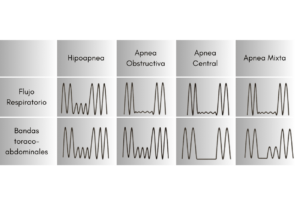
- Obstructive apnea: No air enters, but the chest and abdominal muscles try to compensate through muscle contraction.
- Central apnea: No air enters and there is no effort to breathe. The brain does not send a signal to the muscles responsible for inhalation.
- Mixed apnea: It starts as central apnea (no effort and no airflow) and ends as obstructive apnea (effort resumes, but the airway remains blocked).
Why is it important to distinguish them?
Because each type of apnea requires a different treatment approach. Correctly identifying what happens during sleep is key to choosing the right therapy and improving both rest and long-term health.

Monica
Latest posts by Monica (see all)
- Differences Between Obstructive, Central, and Mixed Sleep Apnea: A Simple Guide to Understanding Them - 23 de December de 2025
- Sleep apnea for the newly diagnosed: everything you need to know - 5 de March de 2025
- Restless legs syndrome, what is it and how to treat it? - 28 de February de 2025
- Consequences of not treating sleep apnea: health risks - 21 de February de 2025
- Exercises to strengthen breathing and reduce sleep apnea - 14 de February de 2025




Leave a Reply